An exchange of comments with Stew about zouaves in my last post got me thinking about the colour and panache these troops brought to the military forces of the world from the 1830s to 1962. It also made me think that there are quite a few units represented in my wargames armies.
 |
| The Zouave, painted by Vincent Van Gogh 1888 |
In 1830 the French invaded and conquered Algeria under the pretext of a slight to its consul, but by October 1830 much of the invading force had been withdrawn to France and local sources of manpower were sought. The first troops raised were recruited from a Berber tribe, the Zwāwa or Zoudaoua, that had provided soldiers to the previous rulers. From these two battalions of zouaves were formed, each of ten companies, eight of the Zoudaoua and two from French settlers, all under French officers and NCOs. A third battalion was raised in 1838.
In 1840 another type of zouave, the tirailleurs algériens (they were never called zouaves, but the uniform was pretty much the same in all but colour), were formed from the Berber and Arab tribes again under the command of French officers. At that same time the basis for enlistment of the zouaves changed and they were universally recruited from French settlers. In 1852, under the Second Empire, the three battalions of zouaves were expanded into three full regiments, each of three battalions. The tirailleurs would also be expanded to three regiments in 1855.
For twenty-three years after their creation the zouaves developed a solid reputation as hard fighters in the colonial conflicts in North Africa, but it was not until they went to the Crimea in 1853 that they gained real fame. Their flamboyant uniform - volumous red pants (these guys pre-empted MC Hammer by 155 years), short blue jackets piped with yellow, a red fez and white turban - plus their ferocity in battle and the bloody big sword bayonets on the end of their rifles caught the attention of the war correspondents and military observers alike.
My first zouaves, in chronological order, are the three battalions in my Crimean army, but could easily be used in the 1830s and 1840's.
The Zouaves and Tirailleurs further enhanced their reputation in the Italian War of 1859. It was from the wars in the Crimea and Italy that they captured the imagination of the American militia of the late 1850s. In the Civil War more than 70 regiments fought for the Union and some 25 companies served the Confederacy.
For my ACW armies I have done the 5th and 146th New York.
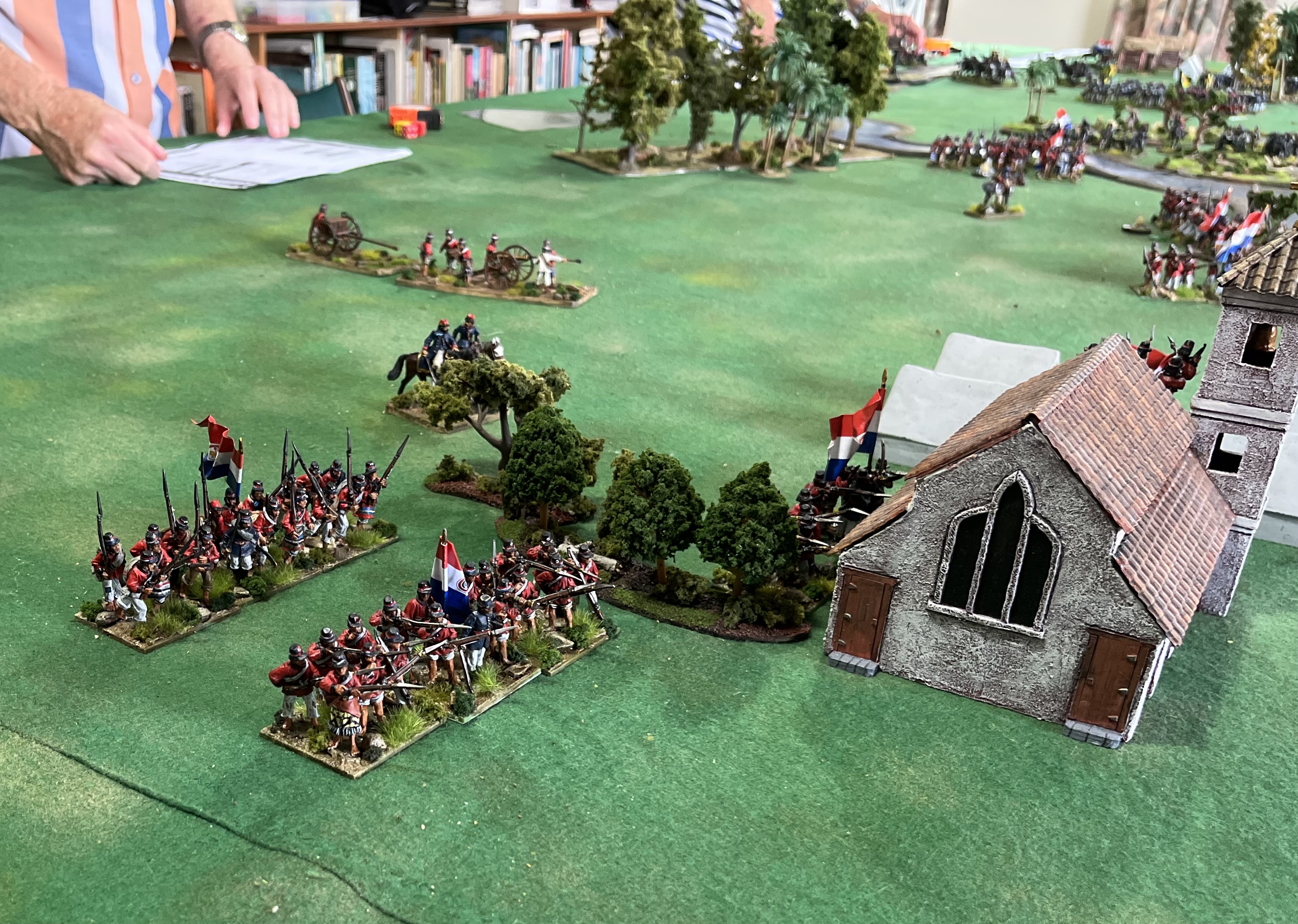
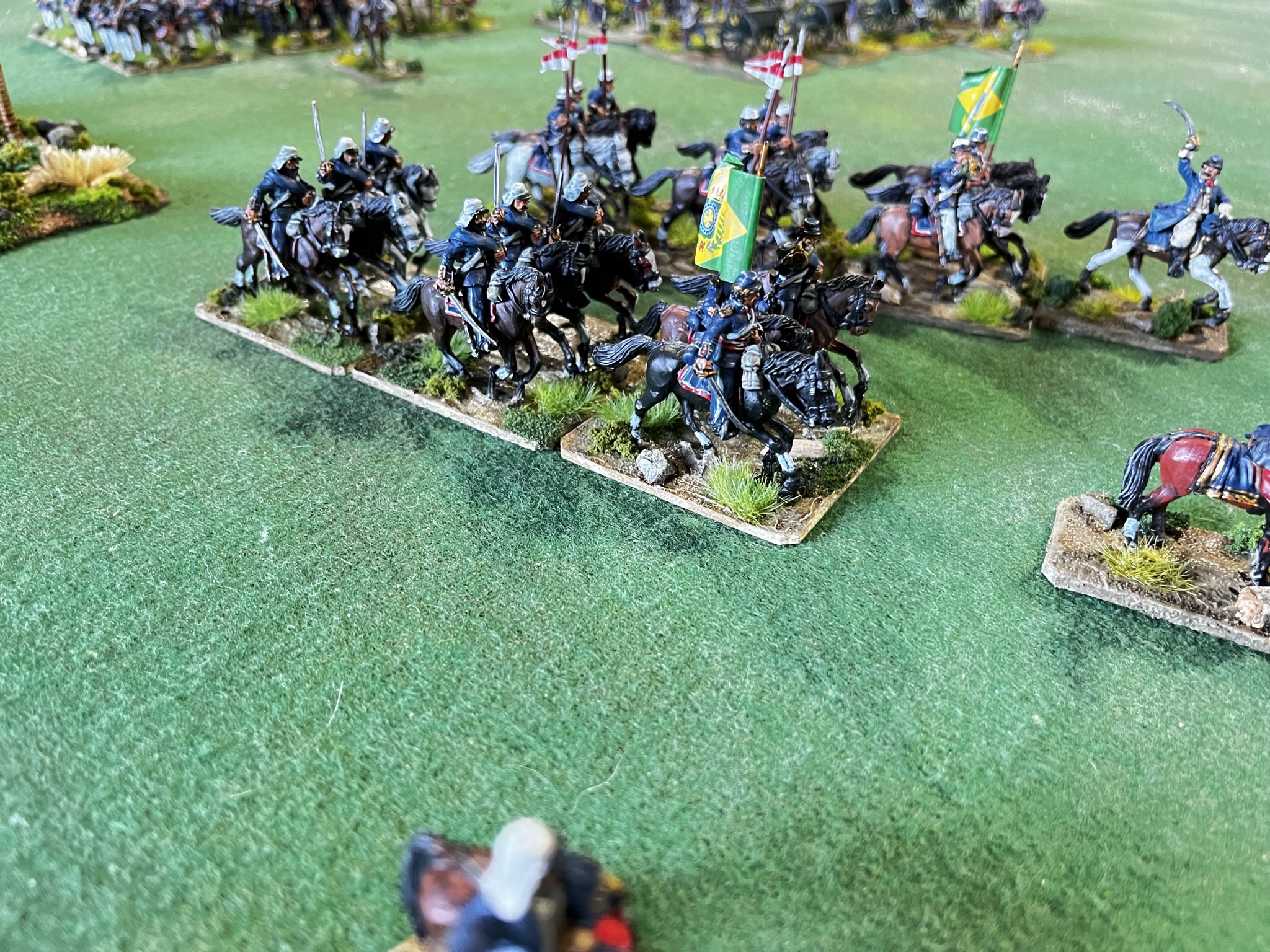
My next zouave unit is the Bahia Zouaves, a unit of the Brazilian Army in the Great Paraguayan War recruited from freed slaves in Bahia State that served briefly in the Great Paraguayan War.
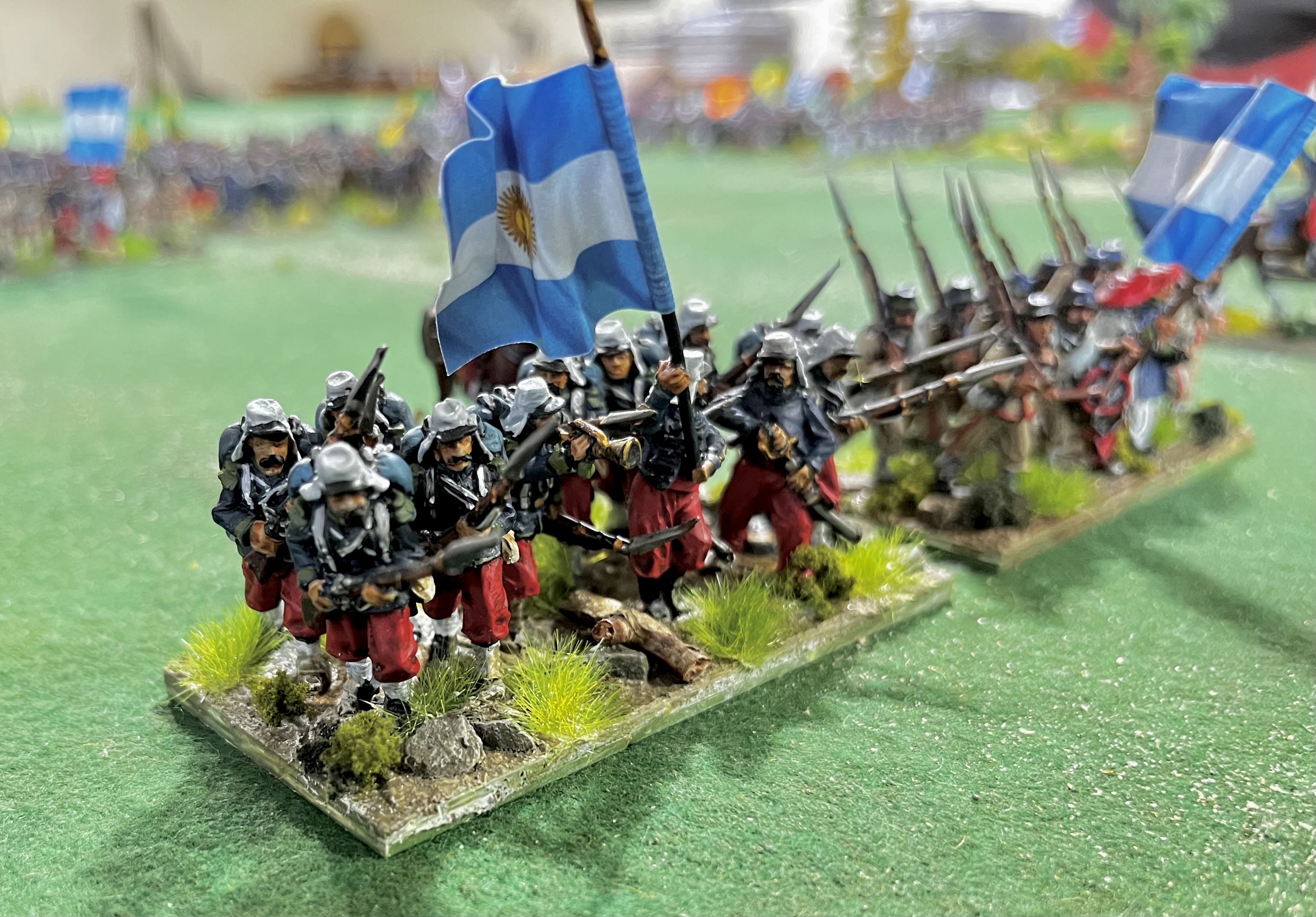
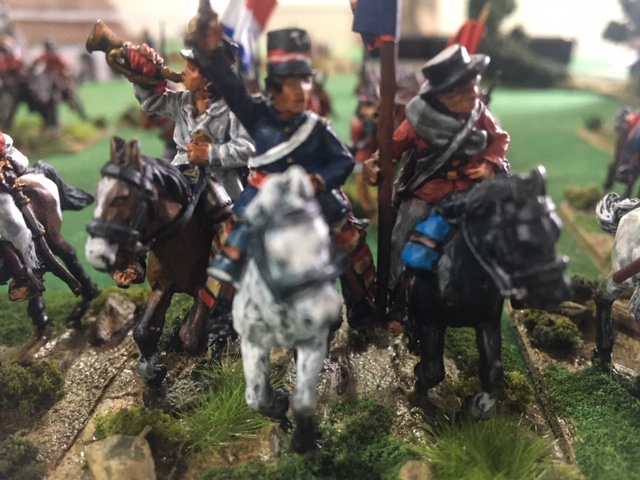
I created a regiment of three battalions of Tirailleurs algériens that for use in the Franco-Prussian War. These chaps along with the zouaves above can be used in the Crimea, Italy and France although technically the models are all armed with rifled muskets rather than Chassepôts, but I can live with that.
My final unit is a small company of zouaves for use in the opening stages of the Great War.
Zouaves continued their fine reputation through the Great War and fought in the opening stages of the Second World War. Disbanded in 1940 they were reformed in 1945 and continued in French service until the end of the Algerian conflict in 1962.
All in all I have ten units of zouaves and tirailleurs algériens that I use in five conflicts and could be used in many other French colonial conflicts...if I choose to game them.